All work
Case study 01 · The Home Depot

Magic Apron

Putting Home Depot's orange-apron expertise in every customer's pocket with gen AI, from product pages to every U.S. store.

My role
Senior UX Manager, the original UX manager on Magic Apron
Team
A dedicated designer, plus a senior designer I coached toward staff
Timeline
2025 to 2026 · launched March 6, 2025
Partners
Product, engineering, data science, Google Cloud, search relevancy, and live chat and customer solutions
01

The problem

The best thing about a Home Depot store is the associate in the orange apron who knows how to fix your faucet. Online, customers had search results and reviews, but nobody to ask.

The goal was to bring that in-aisle expertise into the digital aisles: answers grounded in Home Depot's own product data and decades of how-to knowledge, available on any product page, any time.

1M+
people using it every month
2,000+
U.S. stores with Magic Apron in Store Mode
~3x
the conversion rate when customers engage with it
Next ’26
customer spotlight at Google Cloud Next

Store count and Cloud Next from public sources. Usage and conversion are rounded from internal reporting, 2026.

02 · The bet

The bet

Customers could ask anything. So we didn’t design screens. We designed a system.

These were the early days of gen AI in shopping. It was the Wild West: nobody, us included, knew yet how people wanted to use AI to shop online. With an open chat box, designing screen by screen wasn't an option.

03

How I led

The strategy

From 3 features to 1 magical assistant

Magic Apron didn’t start as one product. It was an umbrella over review summaries, real-time answers on product pages, and a multi-turn assistant, each with its own surface. The real design job wasn’t adding chat. It was turning those pieces, plus order help and live associates, into one assistant that travels across web, app and the store, so customers never need to know which system is answering.

My part was the connective tissue: research planning, North Star discovery, experience strategy workshops and launch readiness for the app, keeping Q&A, reviews, search, live chat and Store Mode pointed at one assistant model.

Setting direction with no playbook

Grounding a brand-new bet in evidence

Nobody, inside Home Depot or out, knew yet how customers wanted to use AI to shop. Rather than let the team guess at screens, I grounded the work in evidence: our own search data, what people typed, AI estimates of top questions, and data science's read on the projects behind them. That gave product, engineering and design one shared map of what to build first, and a way to say no to everything else.

Recreated pattern · not production UI
What grout works best with glass tiles?
1 · Short, direct answer
Go with unsanded or epoxy grout for glass tile. Sanded grout can scratch the glass.
2 · The product, and where it is
Epoxy grout, bright white
Aisle 21 · Bay 7 at your store
3 · What you didn't know to ask
How much do I need? Show me how to grout What else will I need?
Turning principles into a system

A bar every answer had to clear

I set one standard: useful, not a wall of text. Then we turned it into reusable answer patterns for each kind of question, so new questions didn't start from a blank page and the experience stayed consistent as it scaled. Every answer also had to move the customer forward, with the next question to ask and the products they didn't yet know they needed.

This team met the extraordinary challenge to bring the Magic Apron Q&A chatbot to life in just a few weeks to share with our Board of Directors. And they did it!
Jordan Broggi · Executive Homer award
Delivering under pressure

A working product for the board, in weeks

When leadership wanted to show the Board of Directors what gen AI could do for our customers, we had weeks, not months. As the senior UX manager over the two designers doing the work, my job was to protect their focus, cut the scope to what would prove the idea, and keep design, product and engineering moving as one.

Building leaders while we built the product

Growing leaders on a high-stakes launch

New, high-visibility work is the best place to grow people. I led a dedicated designer on it day to day, and used it to coach a senior designer toward staff: how to mentor, guide and lead junior designers. When the work changed hands, the team's leadership had grown along with the product.

Where confident answers went wrong
  • InventorySaid an item was in stock when it wasn’t, and a customer made the drive
  • PolicyPromised a price match the policy didn’t support
  • FulfillmentAnswered a simple assembly question with return policy
  • Product dataGaps in product data turned into wrong answers
  • DiscoveryEven associates weren’t always sure where to find it
What trust had to mean
  1. 01Fresh sources, with the date on inventory and fulfillment facts
  2. 02Policy, pricing and warranty questions routed to the system of record
  3. 03Clear limits on what the AI answers with confidence
  4. 04A graceful hand-off to an associate
  5. 05Feedback that repairs the product data underneath
Better conversation design can’t make up for a stale product fact.
The hardest problem

Trust, not chat polish

Usability testing didn’t turn up a basic interaction problem. Real use did something more important: customers and associates acted on confident answers about stock, fulfillment, price matching and policy that were wrong or incomplete. So trust had to be designed into the whole system, not the chat bubble.

It worked when the facts were right. Pros used it to work out tricky railing angles, and stores leaned on photo questions and multilingual help. Customer questions became a signal too. When one flooring product’s questions were mostly about installation and compatibility, the fix wasn’t a better answer. It was a better product page: specs at a glance, underlayment guides and tool checklists.

From product pages to one assistant

How it grew

  1. Oct 2024
    Research canvas
    Research planning for what customers actually ask.
  2. Jan 2025
    North Star
    Kickoff for where Magic Apron and chat should go next.
  3. Mar 6, 2025
    Launch
    Magic Apron answers on millions of product pages.
  4. June 2025
    One front end
    Readout on unifying Magic Apron with live chat.
  5. Oct 2025
    Experience strategy
    Two-day workshop on the whole assistant experience.
  6. Apr 2026
    Google Cloud Next ’26
    A customer spotlight on Google’s stage.
  7. Sept 2026
    Native in the app
    Launch approved, with UX readiness green.
  8. Nov 2026
    AI and live chat, unified
    Fully live for B2B and B2C across web, mobile web and app.
04

Five problems the experience had to solve

Screens · Images: The Home Depot

01 · Entry

Make it findable, in context

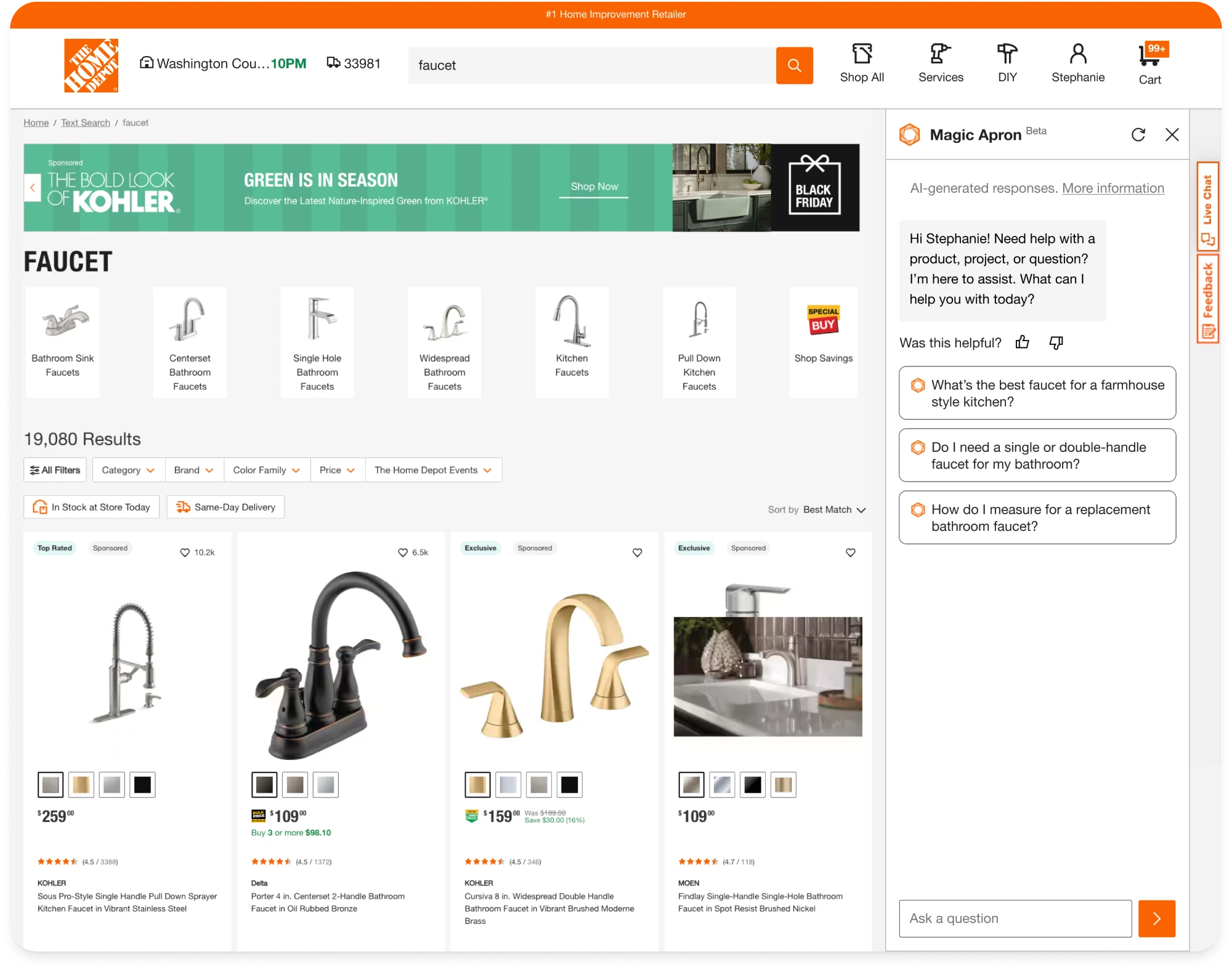
ProblemCustomers scrolled right past it. A branded bot name didn’t say what it could do.

Design responseEntry points where questions already happen: in search suggestions, on product pages, in the tab bar, with task language like “Ask a question”.
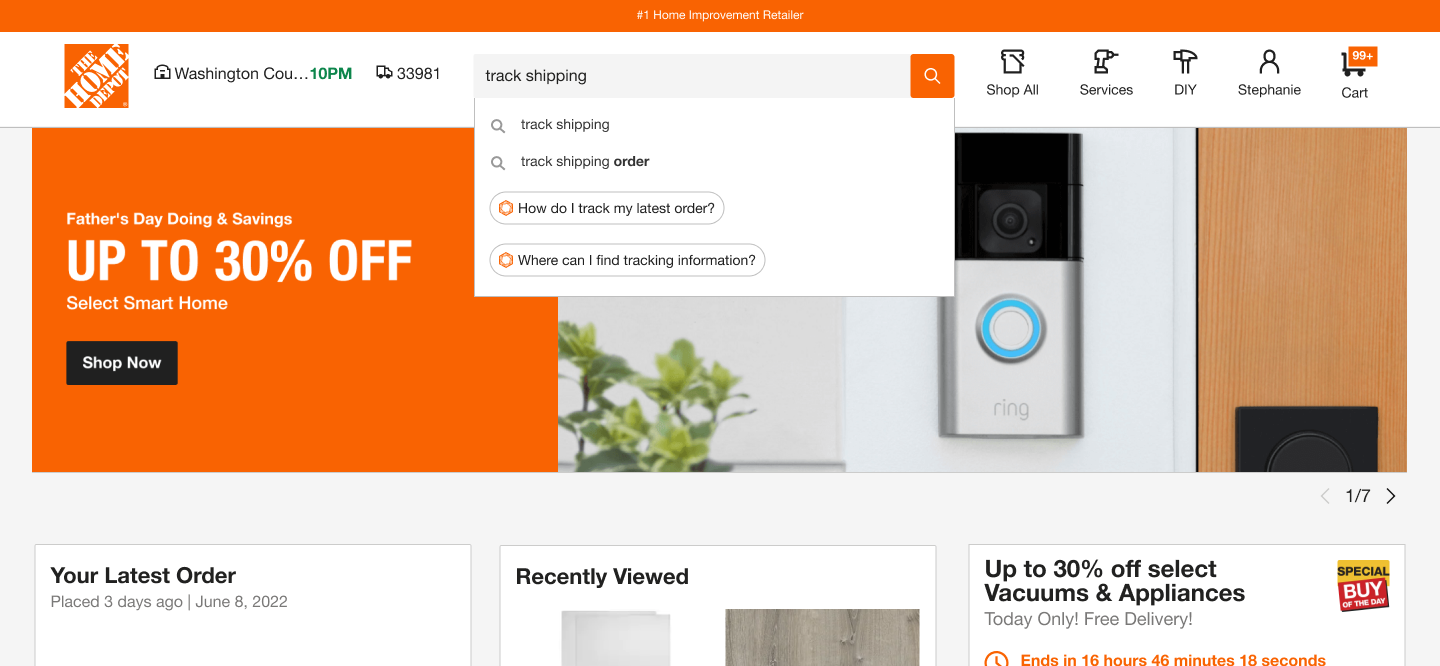
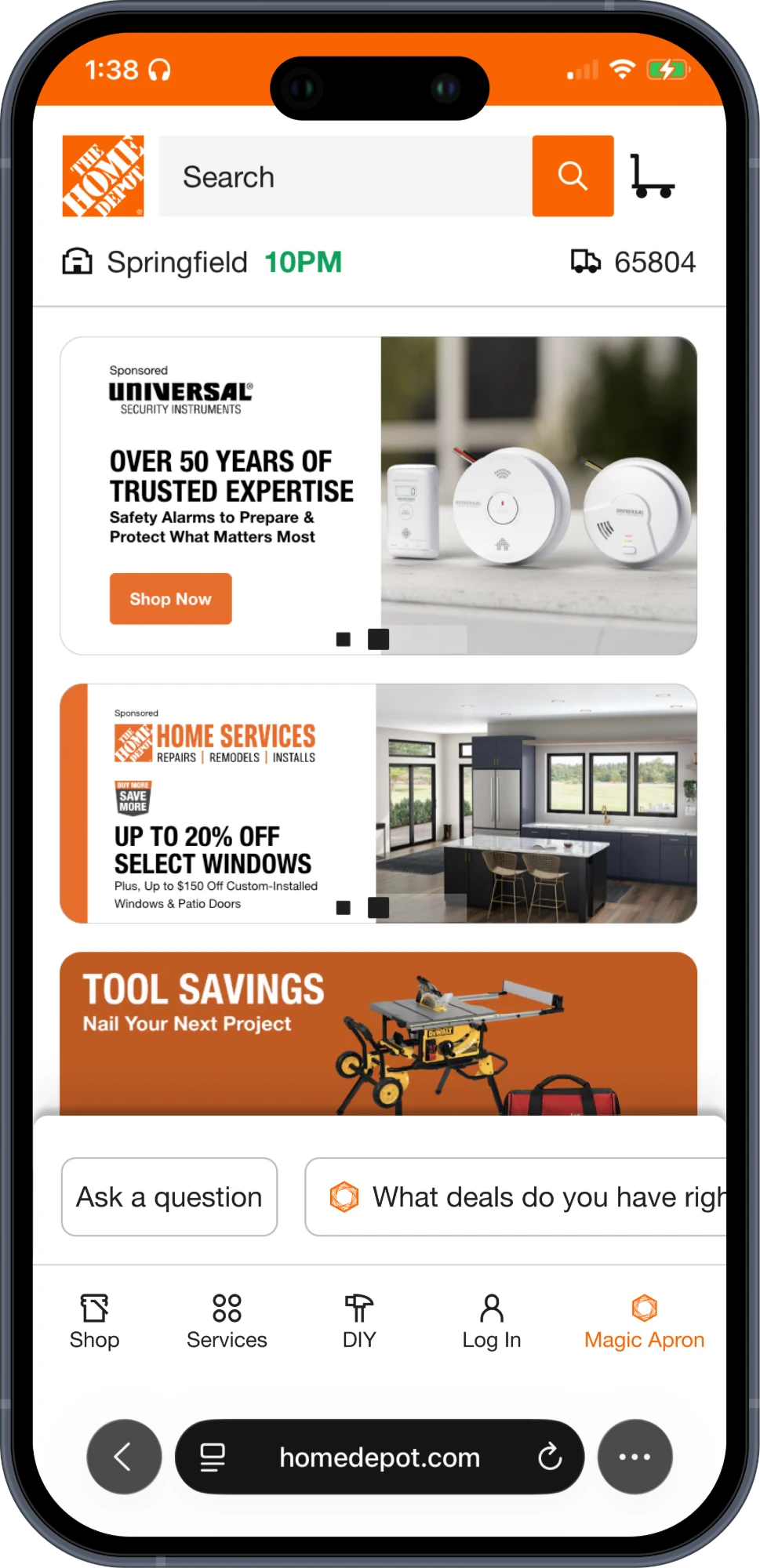
Search typeahead for track shipping with Magic Apron questions under the search suggestions The Home Depot app home screen with Magic Apron in the tab bar and an Ask a question prompt
02 · Expectation

Say what it can do

ProblemPeople didn’t know if it could help with an order, or when an answer was the final word.

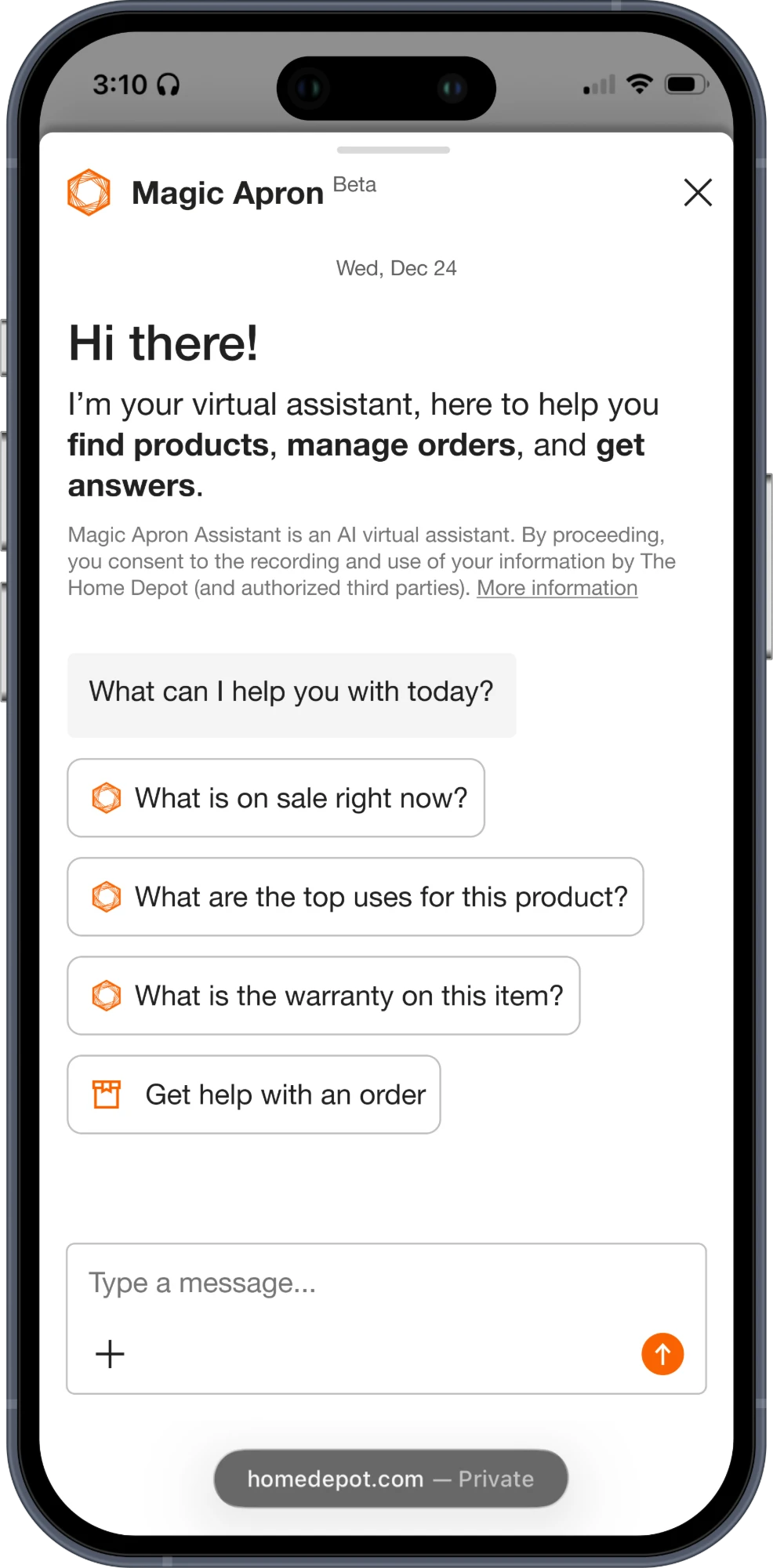
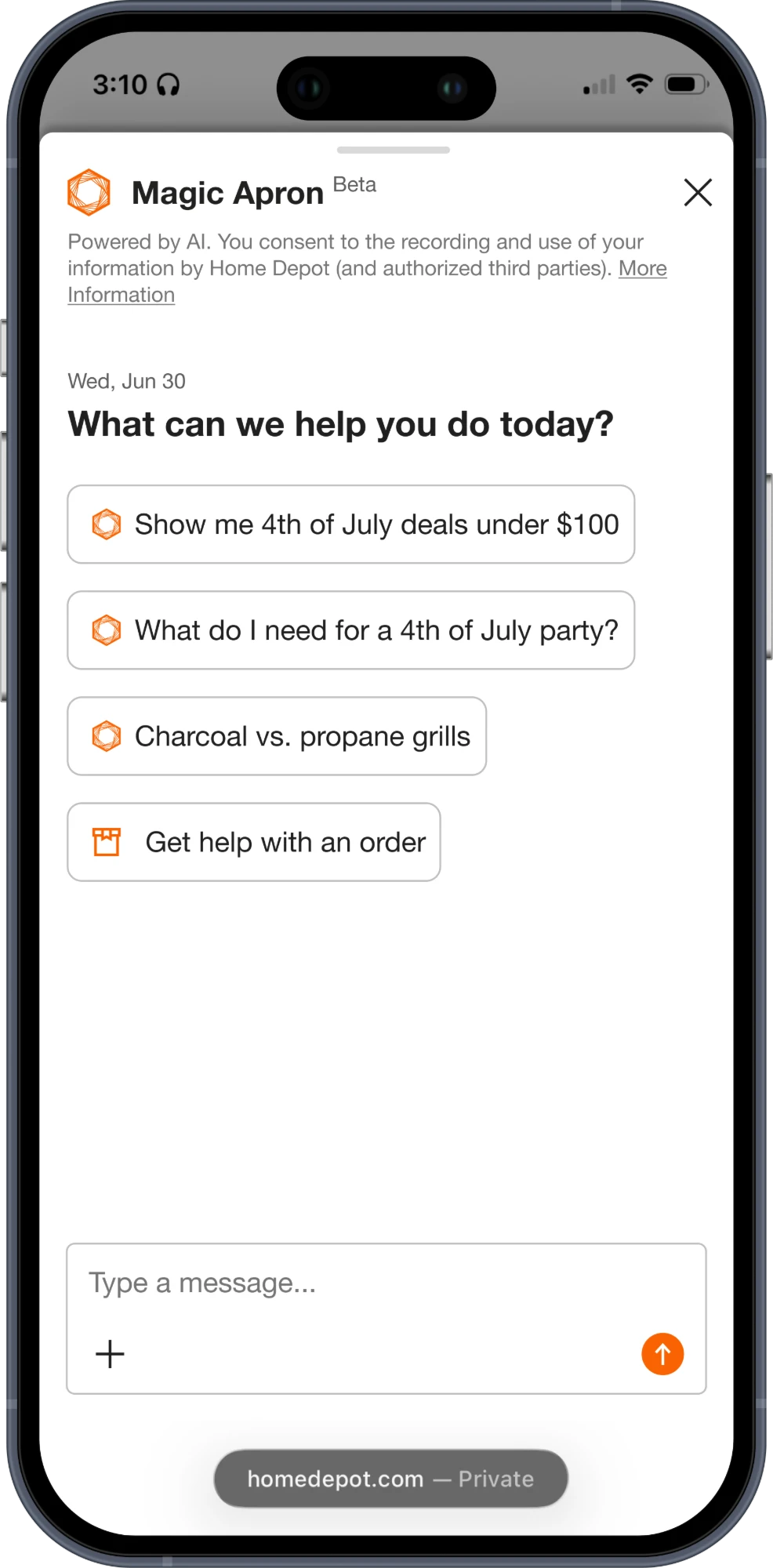
Design responseA clear promise up front, prompts that change with the page, and one interface for products, orders and answers.

Magic Apron welcome screen: find products, manage orders and get answers, with suggested questions Magic Apron suggesting Fourth of July deals and grill questions
03 · Continuity

Keep the thread

ProblemShopping jumps between pages. Losing the conversation meant starting over.

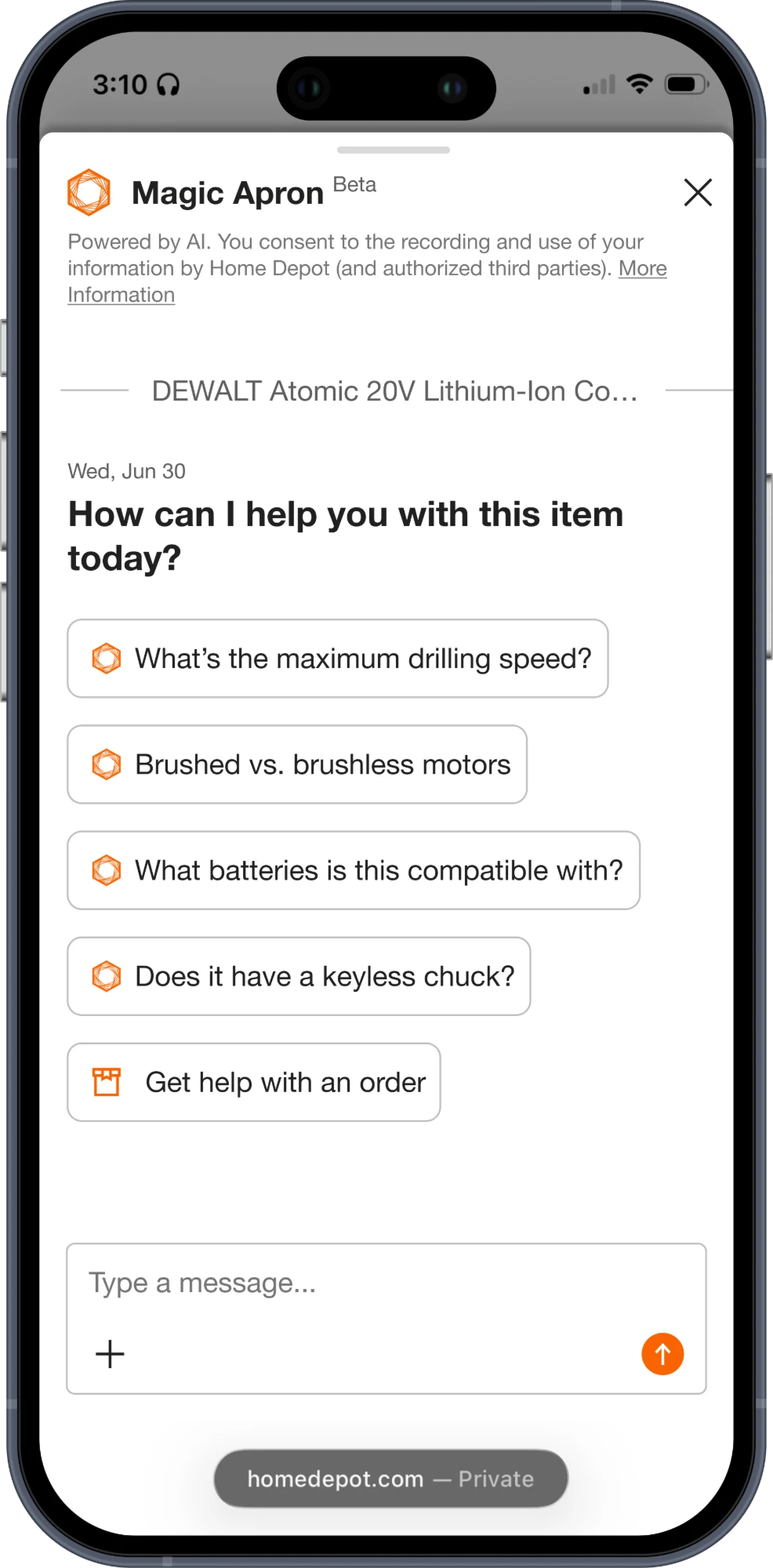
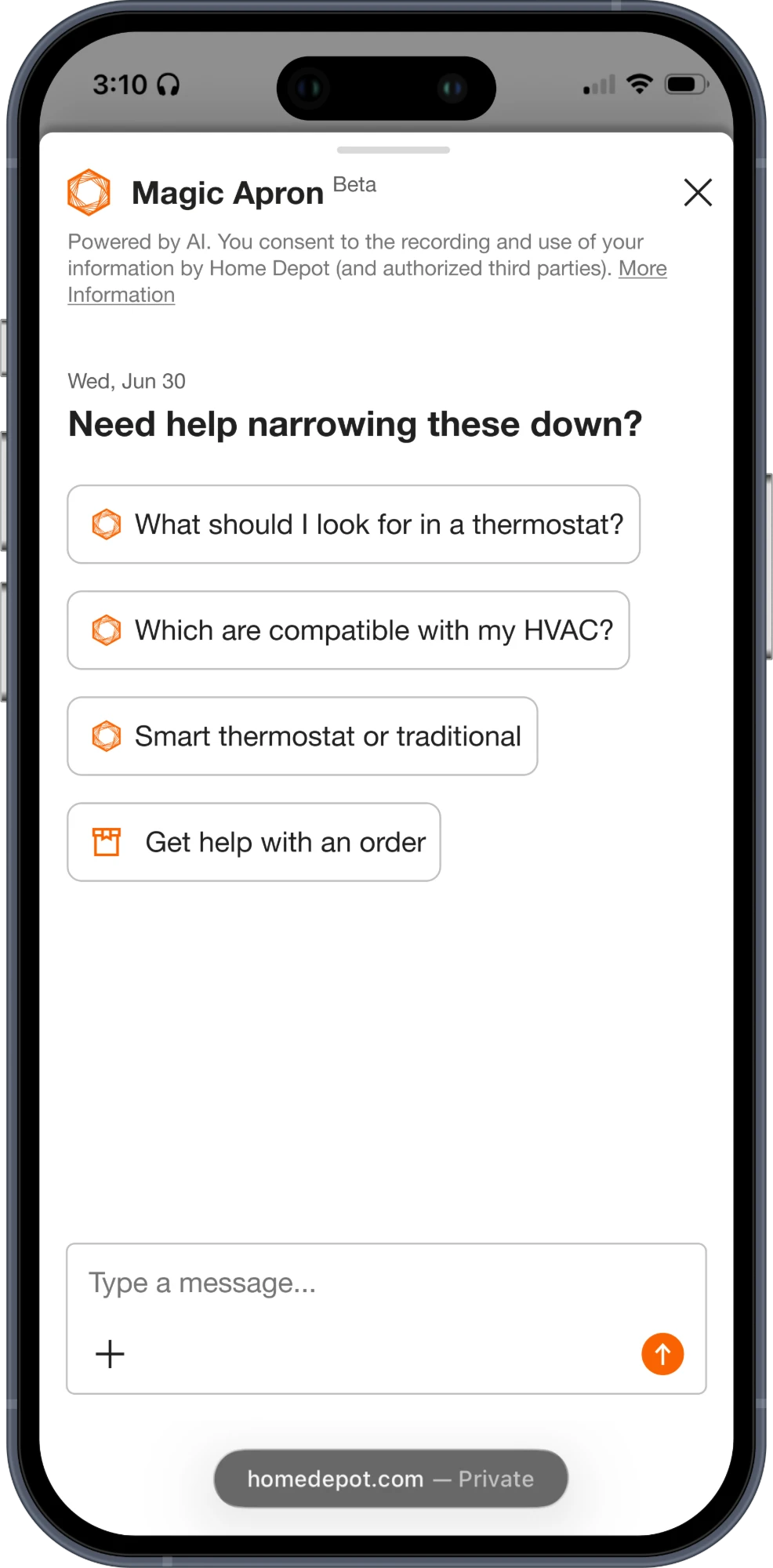
Design responseContext that follows you: it knows the page you’re on, refreshes its suggestions as you move, and keeps the conversation going.

Magic Apron suggesting questions about the DEWALT drill being viewed Magic Apron asking Need help narrowing these down? on a thermostat results page
04 · Commerce

Put products in the answer

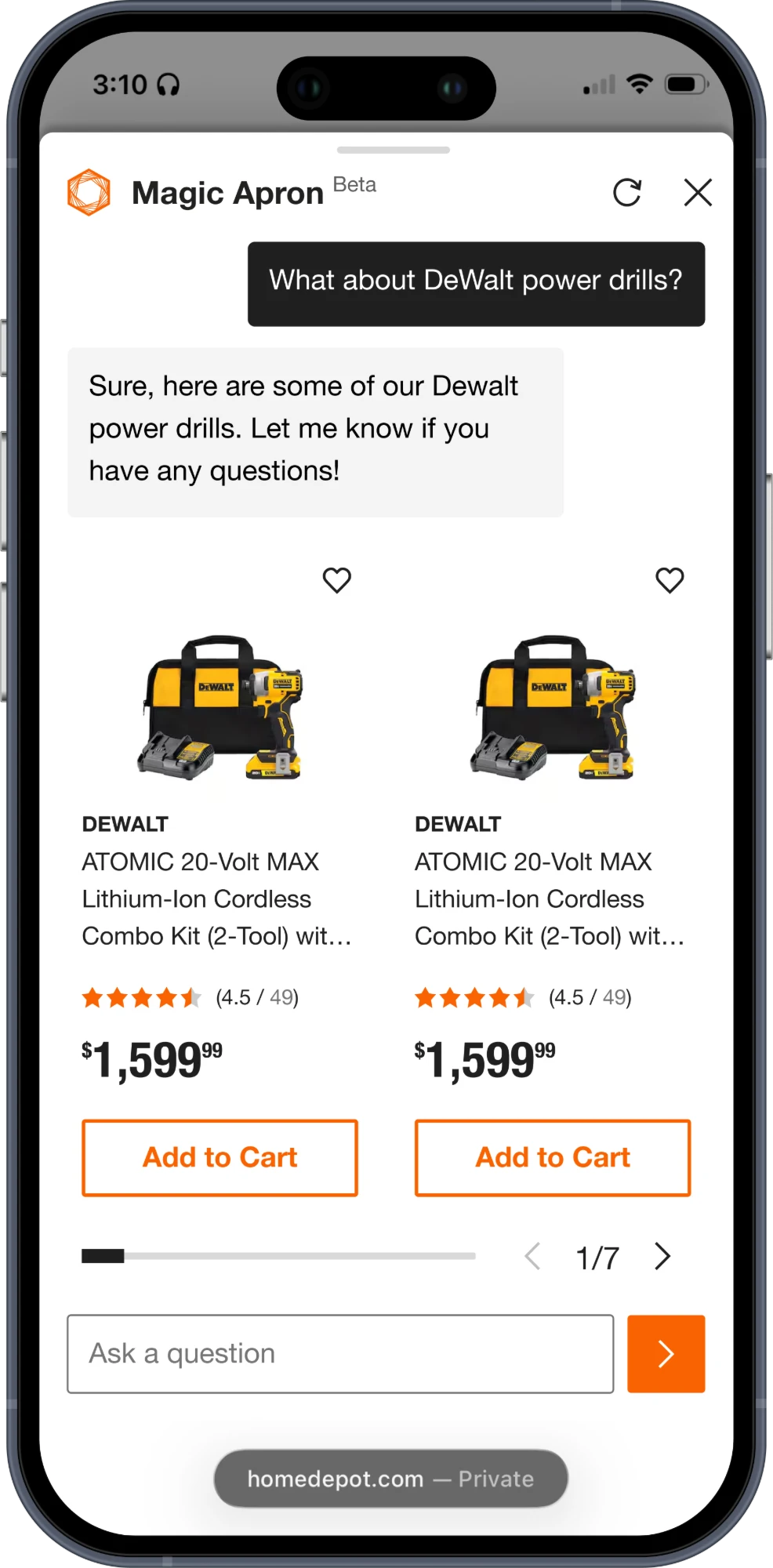
ProblemAdvice that ends in text leaves the customer to go find the thing.

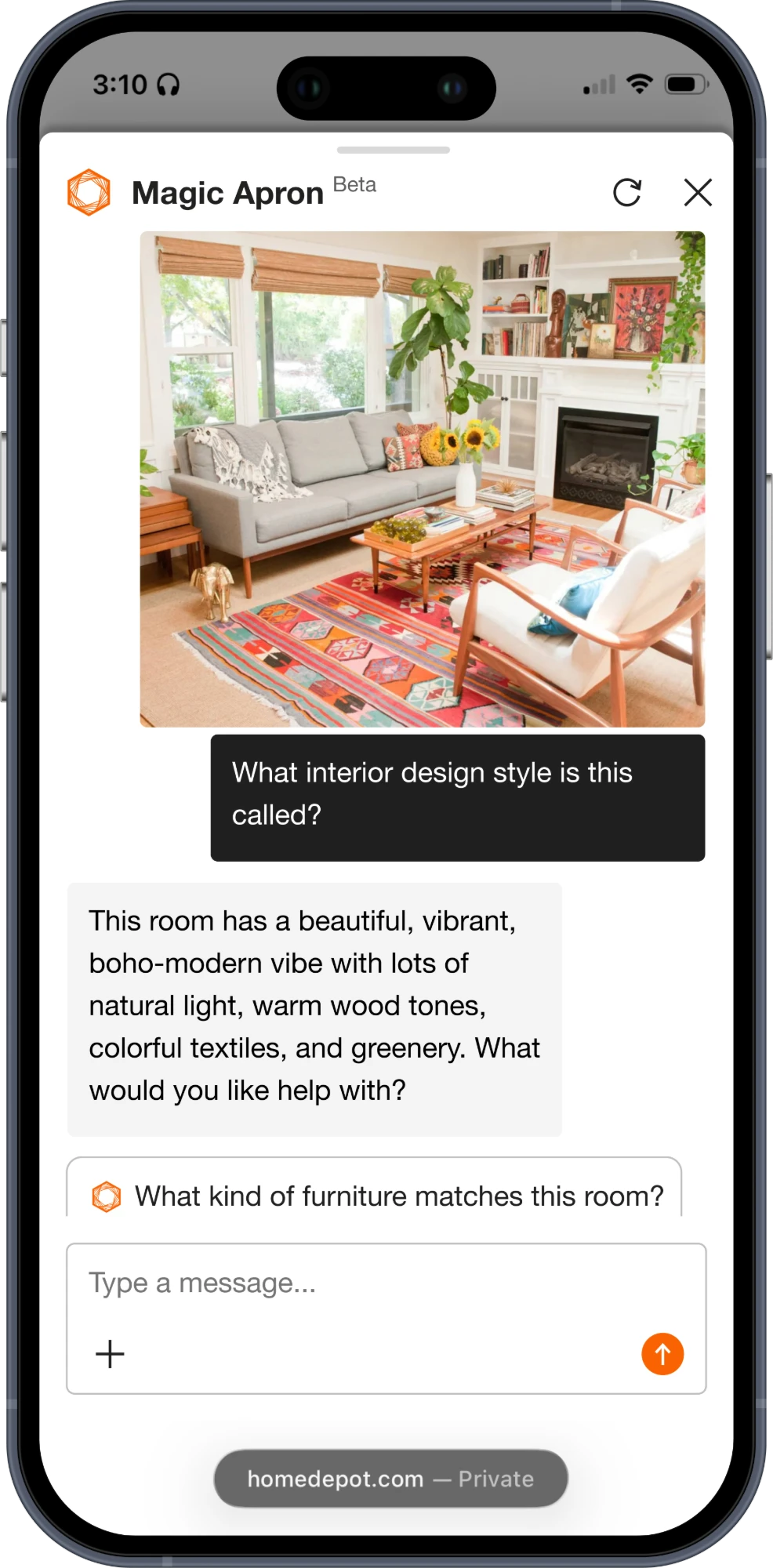
Design responseProducts, prices and Add to Cart inside the answer, with the top few slots treated as the ones that matter. Photos work as questions too.

Magic Apron answering with a carousel of DEWALT drill products A customer shares a photo of a living room and Magic Apron describes its style
05 · Escalation

Hand off to a person, without a restart

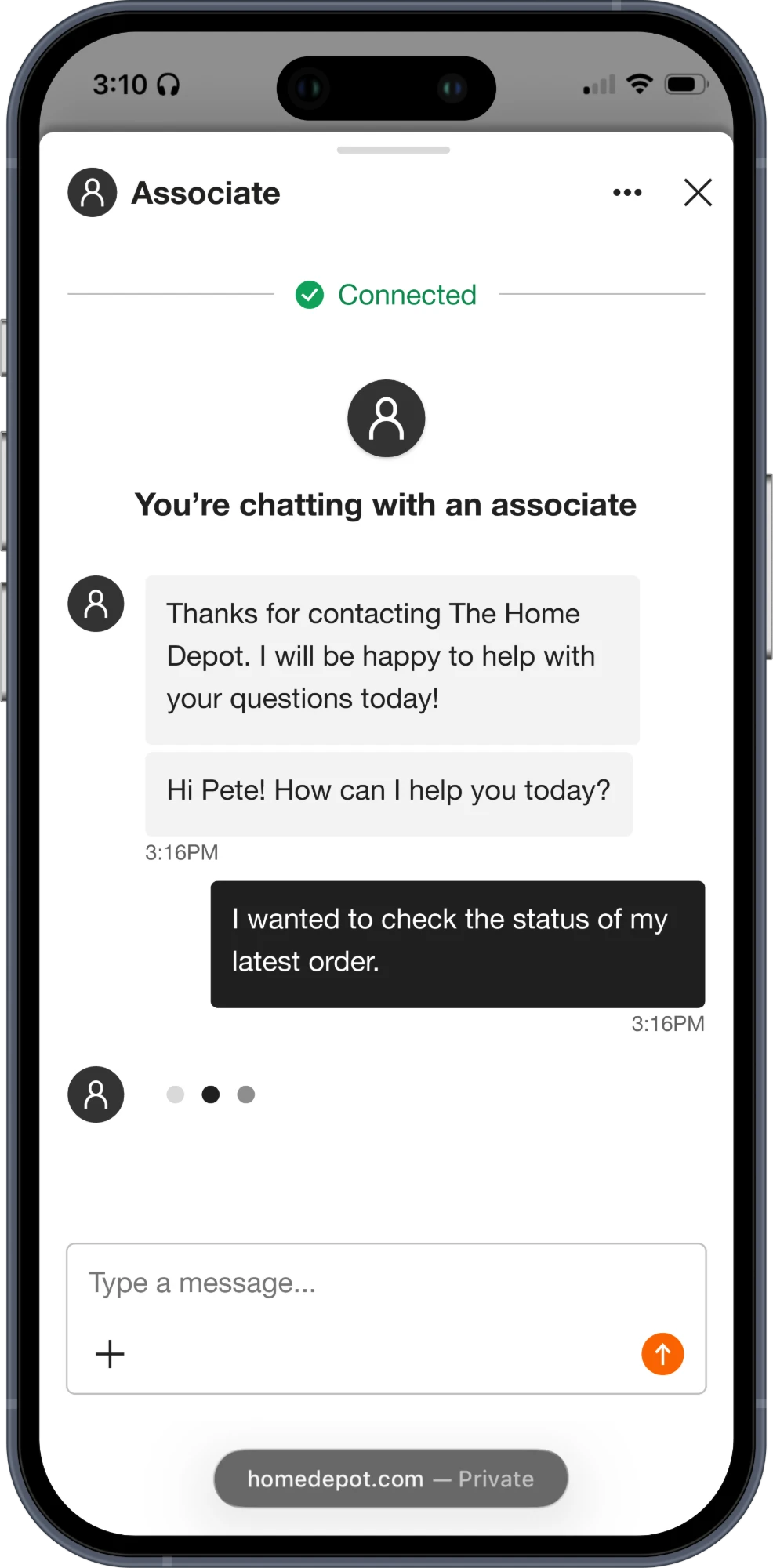
ProblemSome questions need a human. Switching to a separate chat meant telling the story again.

Design responseAI help and live associates behind one entry point, with the conversation routed to the right help and handed off when AI alone isn’t enough.

Chat handed off to a Home Depot associate
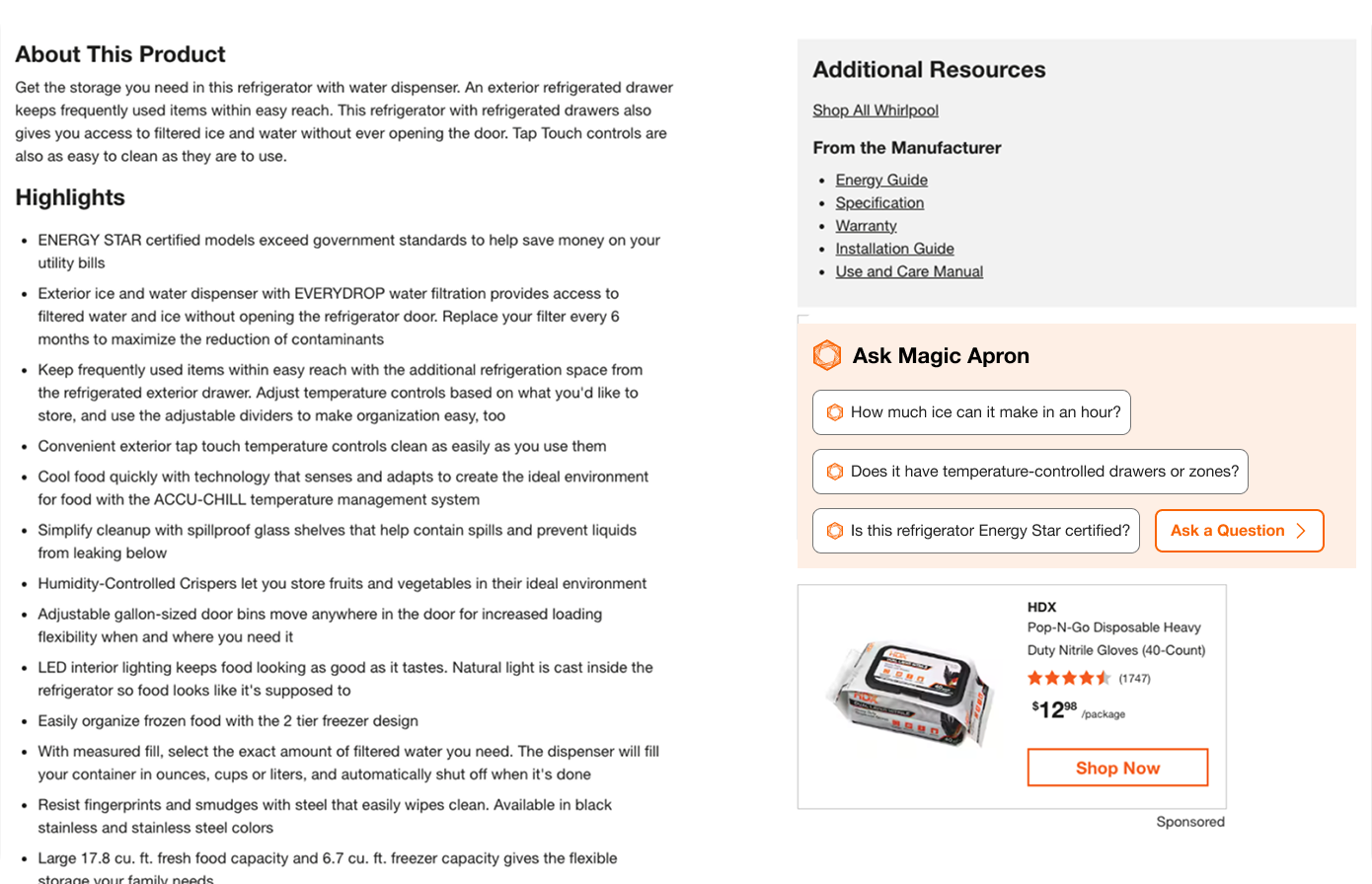
Refrigerator product page with an Ask Magic Apron module and suggested questions
Where it started: Ask Magic Apron on the product page, answering questions from product content.
05

What it became

I led UX from the early days through launch, Google Cloud Next and the first half of the rollout to every U.S. store, until a reorg moved Magic Apron into another leader's portfolio. Here's what it left behind.

For customers
An expert in every pocket

Tens of thousands of questions a day from more than a million people a month, on product pages, in the app and in every U.S. store through Store Mode.

For the business
A flagship for Home Depot’s AI story

From a board demo built in weeks to a Google Cloud Next ’26 customer spotlight. Once AI help and live chat became one experience, revenue per engaged visit rose by more than half and conversion by about a quarter.

For the team
Patterns and people that kept going

Answer patterns other teams kept building on after the reorg, contextual entry points that kept spreading through the app, a habit of evolving the experience from what customers actually asked, and a senior designer who grew into leading others.

06

What I'd do differently

I'd launch narrower, not later.

Waiting for more research wasn't an option: the space was moving fast and every competitor was shipping AI. But an assistant that misses on someone's first try teaches them never to come back. Next time I'd open with the handful of question types it could nail, say plainly that it's new and learning, and widen it as the answers earned trust, so the first impression is a good one.